
3 Steps You Can Take Today to Help Raise Your Credit Score
September 24, 2026
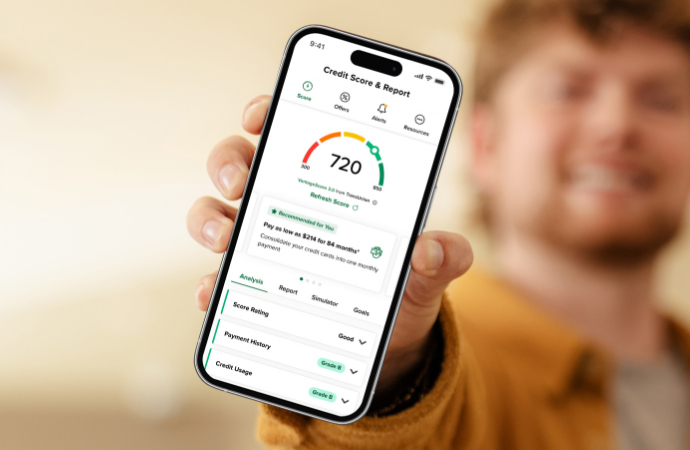
Want to improve your credit score, but not sure how? The good news is that a few small actions can make a big difference over time.
Read on to understand three important factors that influence your credit score. Then, learn how you can use Credit+™ in digital banking to get a personalized action plan and practical steps for moving forward.
1. Pay your bills on time.
Your payment history is one of the biggest factors affecting your credit score. Consistently paying on time—even the minimum payment—helps show lenders you’re a reliable borrower. Just one late payment can have a negative impact, but there are ways to avoid missing a payment.
Take action:
- Use Credit+ to review your credit report and see all your open credit accounts in one place. Always check your report for any errors, too.
- Then, set up automatic payments for at least the minimum payment amount through RCU digital banking (or separately with each credit card company).
- Keep checking Credit+ regularly to monitor your accounts and confirm your payment history stays on track.
2. Lower your credit utilization.
Credit utilization is the percentage of available credit you’re using. For example, if you have a credit card with a $5,000 limit and a $2,500 balance, you’re using 50% of your available credit. Keeping credit card balances low compared to your credit limits can help your score. Ideally, you should keep your utilization below 30%, but lower is always better. High balances can be a red flag to lenders, even if you make payments on time.
Take action:
- Access your credit report in Credit+ and review the balances and credit limits for each of your credit cards.
- Use the Credit Simulator in Credit+ to see how different actions (such as paying $5 or $100 extra, doubling your payment, or paying a card or loan off in full) could affect your credit score.
- Look for the cards with the highest utilization (where your balance is closest to your limit). Try to pay down these balances first, even if it’s one at a time and a few dollars at a time. You’ll still be making progress and saving money on interest!
3. Make the most of your current credit history.
Lenders like to see a long track record of credit. Keeping older accounts open can help demonstrate a longer credit history and support your score over time. It may be tempting to close older credit cards, but that could reduce the average age of your open accounts, especially if you’ve opened a new card recently. Lenders also look at how often you apply for credit, so try to limit unnecessary credit inquiries.
Take action: Before opening any new accounts or closing a card:
- Review your Score Analysis and full credit report in Credit+ to identify which of your accounts have been open the longest.
- Use the Credit Simulator to compare different scenarios. You can see how getting a new loan or credit card, increasing your credit limit, closing your oldest card, or transferring balances to a new card would impact your score.
Bonus: Set a credit goal.
Trying to improve your credit score without a goal can feel like taking a road trip without a destination. And if you’re just starting to build your credit or have already made some mistakes along the way, how do you know what your goal should be? Credit+ can help with that, too.
In fact, RCU Members who set a credit score goal have seen average score increases ranging from 16 to 60 points over six months, depending on their credit profile.
Take action:
- Set a credit score goal in Credit+, explore the personalized improvement recommendations tailored specifically to your situation, and track your progress along the way.
- Use the Credit Simulator to test different strategies and see which actions may help you reach your goal faster.
- Each month, you’ll receive a progress update so you can celebrate your successes, stay motivated, and adjust your goal as needed.
Building credit doesn’t happen overnight, but small steps do add up.
Building stronger credit can help put your financial goals within reach. Small steps today can make a big difference tomorrow. Whether you’re planning to buy a car, purchase a home, or simply strengthen your financial foundation, improving your credit score can open doors and help you borrow with confidence.
Disclosure
Credit+ is a feature of your digital banking account. RCU, in partnership with SavvyMoney, Inc., will provide you with your credit score and report. This is a soft pull and will not affect your credit score. You may apply for products and services made available by RCU. You may revoke this authorization at any time through your credit score profile settings. Certain restrictions apply.
PPP Forgiveness Application Deadline
Congress passed The Economic Aid Act which changed the deferment period from 6 months post covered period to 10 months post covered period. For example, if your covered period ended June 30, 2021, under the new guidelines the earliest your first loan payment wouldn’t be due until April 2022, and you have until then to request forgiveness. Please use the following calculation to help you identify when your forgiveness will be due:
- PPP borrowers may select a covered period anywhere from 8 weeks to 24 weeks.
- RCU is automatically calculating your loan due date based on a 24-week covered period, if you intend on using a shorter covered period please inform us immediately as this will impact your due date.
- Your correct deadline will be reflected in your online banking account.
If all or part of your PPP loan is not forgiven, your first loan payment will be due the first of the following month after a decision is made by the SBA.
Leaving Our Website
You are leaving our website and linking to an alternative website not operated by us. Redwood Credit Union does not endorse or guarantee the products, information, or recommendations provided by third-party vendors or third-party linked sites.