Business ACH Services: How to Add, Edit, or Delete a Template
A template is the “wrapper” around an individual or group of recipients, used to process transactions.
To process a template/file, you must create a template, add recipients, and approve it before you can schedule transactions.
Example: ABC Inc. has 15 employees and each employee has direct deposit. The company creates a template called “Payroll,” then adds each employee under Recipients. Company enters the amount for each recipient in the template and schedules it. Once scheduled, the business must go to the Approval page and approve the request. The template will then be listed under Scheduled.
This article covers the following topics:
Related pages
Mobile
If you're using a mobile device, follow the steps below. For computers, go to the desktop steps.
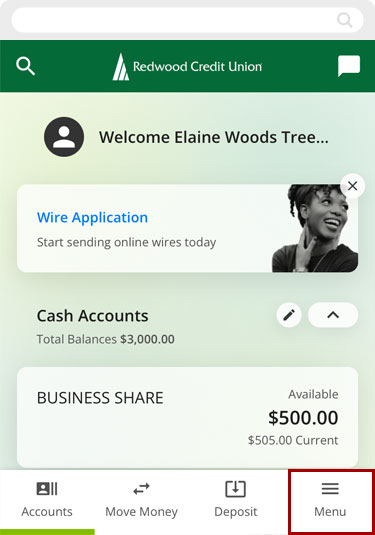
Select Menu at bottom right.
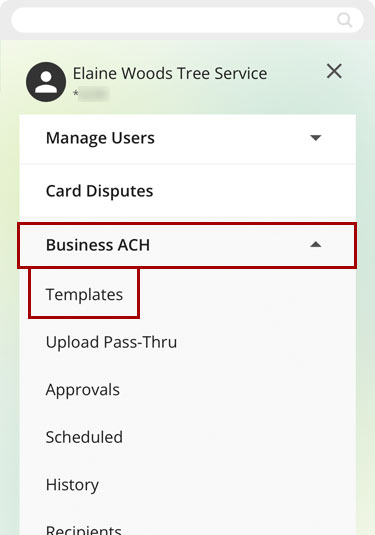
Tap Business ACH and select Templates.
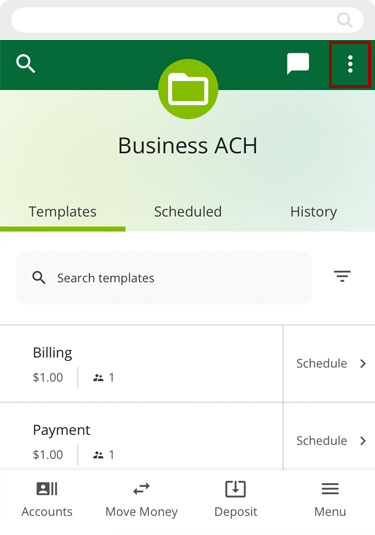
Select the three dots (...) at top right to open the More Actions menu.
You will see options to Create a New Template from scratch, Upload a Pass-Thru File, or Import a New Template.
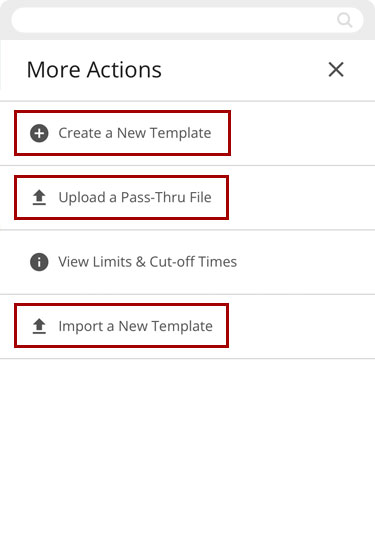
Create a New Template
Select Create a New Template.
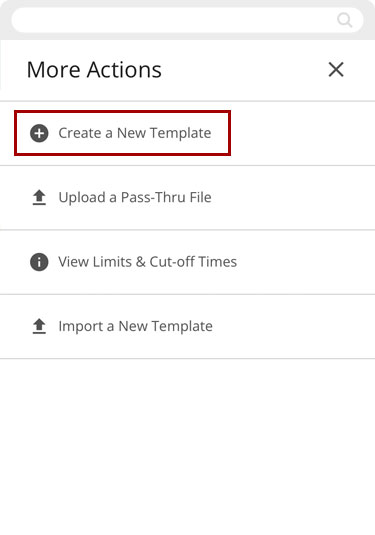
Complete the New Template details:
- Enter a Template name.
- Select the Company name from the drop-down menu.
- Select the Transaction type (SEC code) to identify the transaction.
- Enter a template Description (Payroll, Billing, etc.)
- Select the appropriate Offset account.
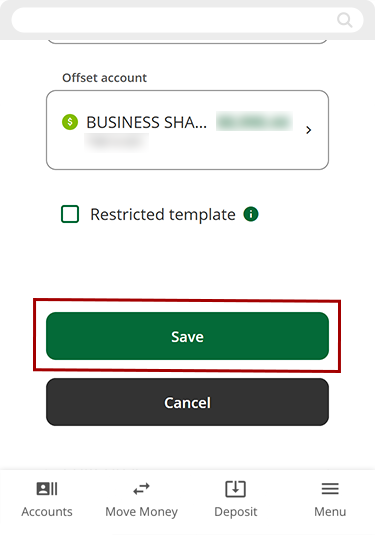
- If you wish to make it a Restricted template, check the box.
Note: Restricted templates can only be seen and used by sub-users with roles allowing access to restricted templates. Example: You might want a holiday bonus template to be restricted.
.png)
Once you have completed all the fields, tap Save.
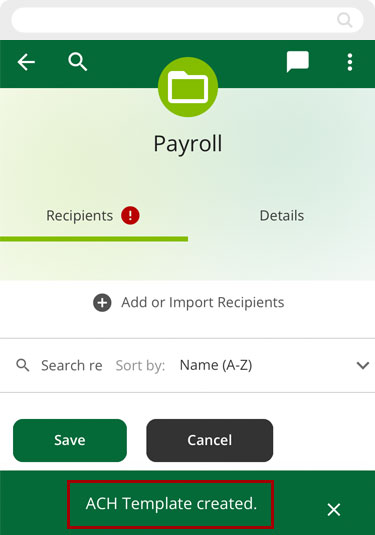
You will see a message confirming your ACH template was created.
Note: The red exclamation point indicates you need to add a recipient to the template.
Upload a Pass-Thru File
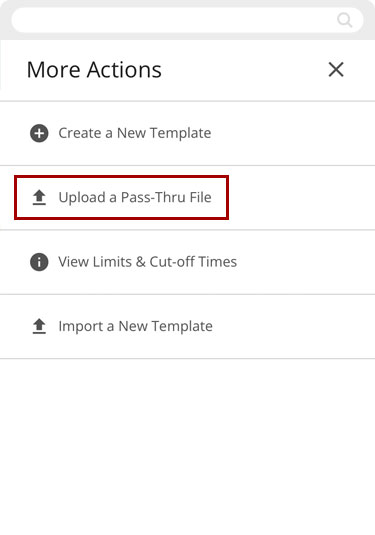
Tap the three dots (...) at top right to open the More Actions menu, then select Upload a Pass-Thru File.
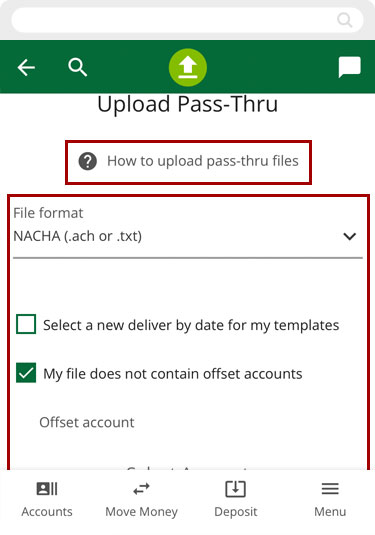
Select the File format, check the box for Select a new deliver by date for my templates (if needed), and check the box for My file does not contain offset accounts (if applicable). Then upload your file and follow the prompts.
For more information, tap How to upload pass-thru files next to the question mark (?) at the top.
Import a New Template
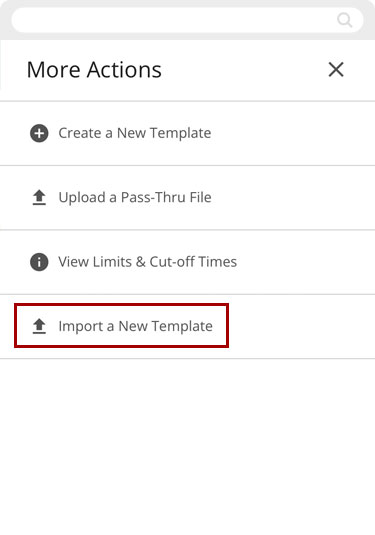
Tap the three dots (...) at top right to open the More Actions menu, then select Import a New Template.
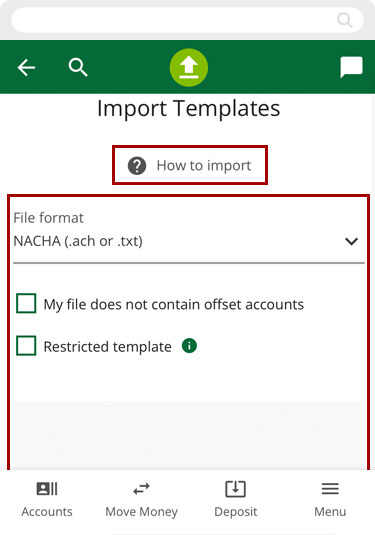
Select the File format, check the box for My file does not contain offset accounts (if applicable), and check the box for Restricted template (if applicable). Then upload your file and follow the prompts.
For more information, tap How to import next to the question mark (?) at the top.
Edit Templates
From the Templates screen, select the template you want to edit.
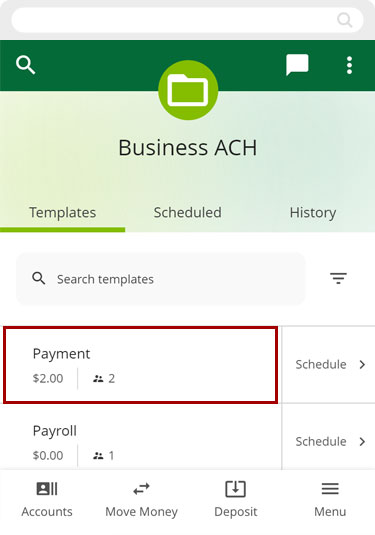
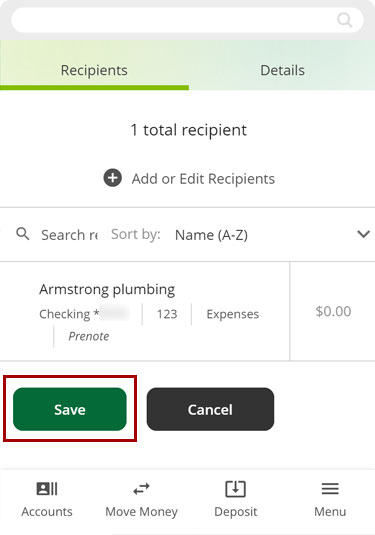
Makes changes to the template, then tap Save.
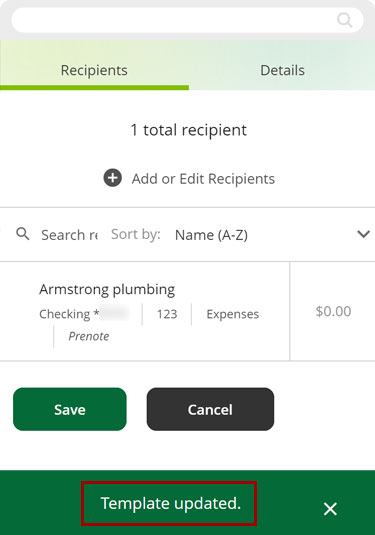
You will see a message confirming the template was updated.
Delete Templates
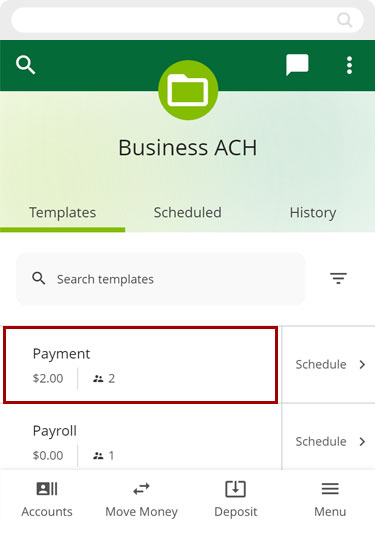
From the Templates screen, tap the template you want to delete.
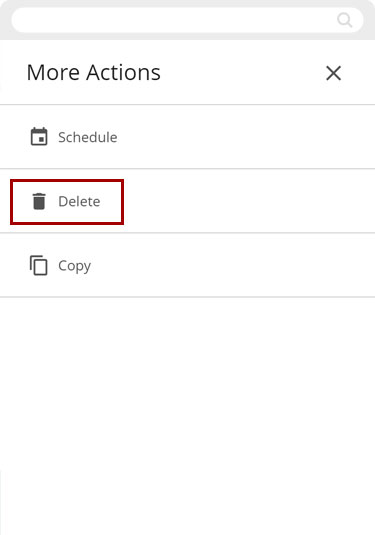
Tap the three dots (...) at top right to open the More Actions menu, then select Delete.
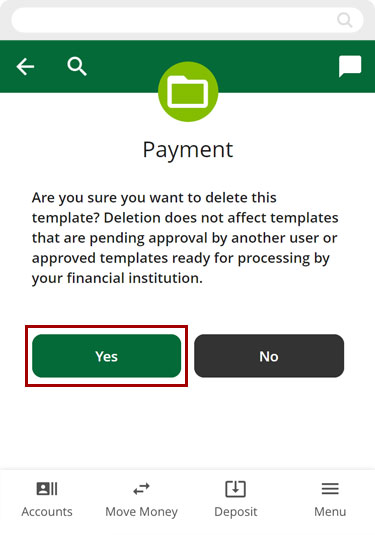
You will see a confirmation screen. Tap Yes to delete the template.
Important: You cannot delete templates that are pending approval by another user or that are approved and ready for processing by your financial institution.
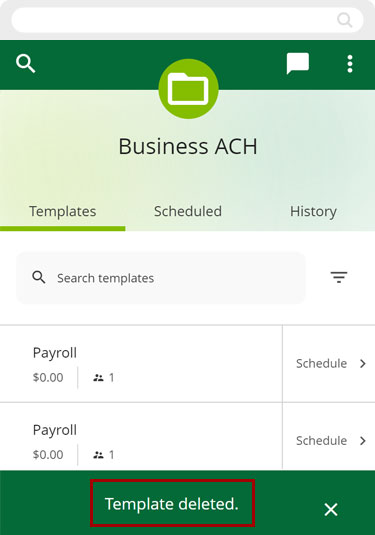
You will see a message confirming the template was deleted.
Desktop
If you're using a computer, follow the steps below. For mobile devices, go to the mobile steps.
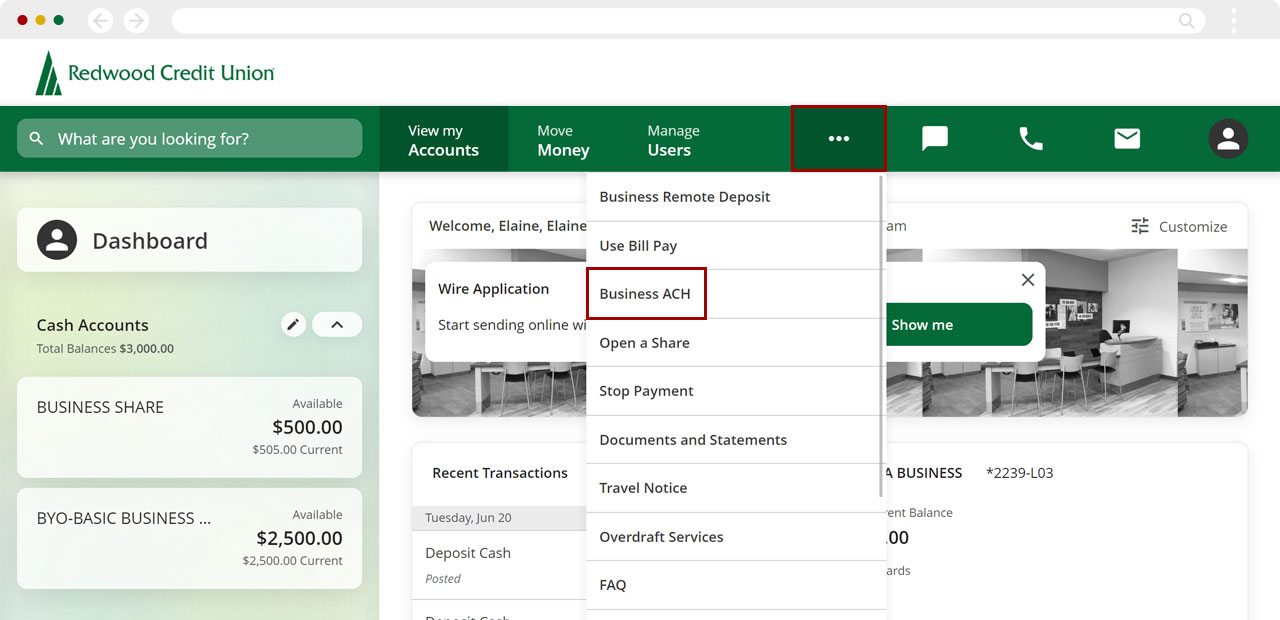
Select the three dots (...) to open the More menu, then select Business ACH.
You will see options to Create a new template, Upload a Pass-Thru File, or Import a New Template.
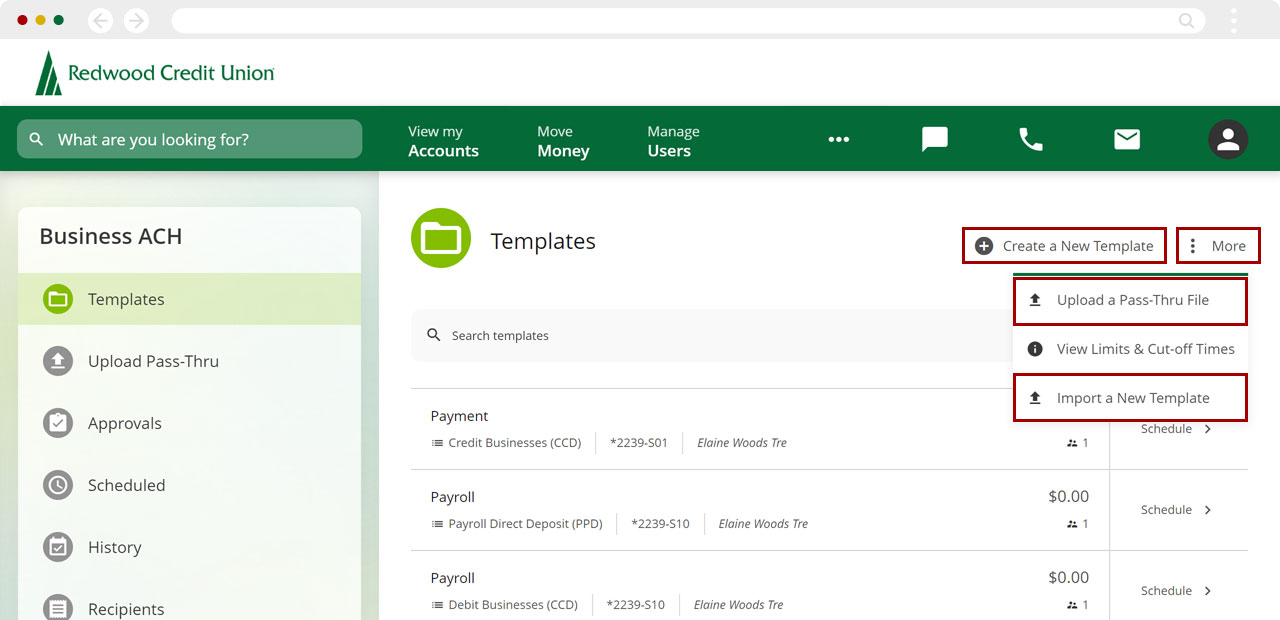
Create a New Template
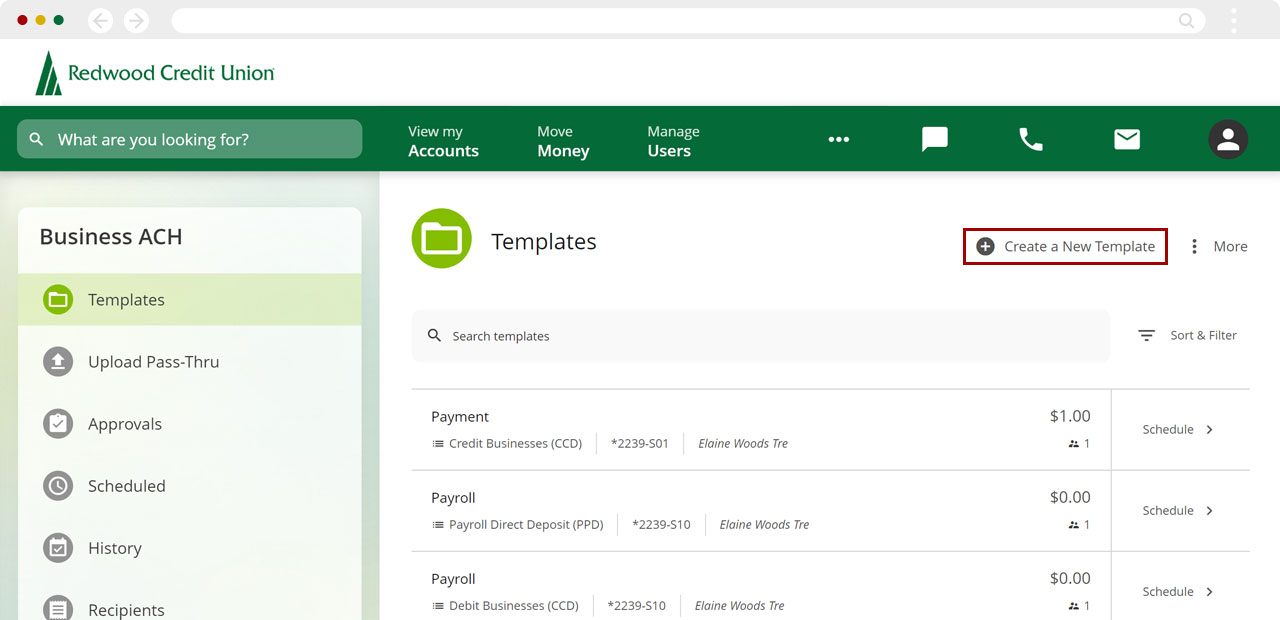
Select Create a New Template.
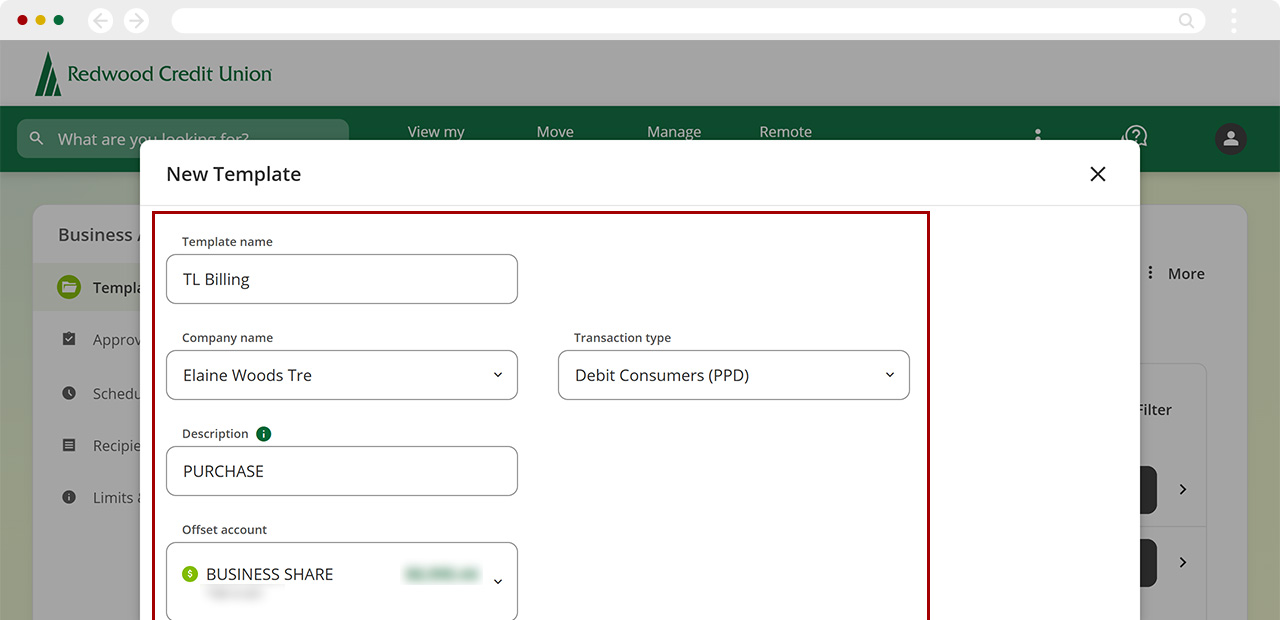
Complete the New Template details:
- Enter a Template name.
- Select the Company name from the drop-down menu.
- Select the Transaction type (SEC code) to identify the transaction. If you select Debit Consumer (PPD) or Payroll/Credit Individual (PPD), you will be prompted to answer an additional question about the transactions. If you select yes, the system will automatically populate the required description.
- Enter a template Description (Payroll, Billing, etc.)
- When originating consumer PPD debits for online purchases such as e-commerce goods, digital products, or online subscriptions, the Company Entry Description field must contain the term "PURCHASE" to be in compliance with the Nacha Operating Rules, which govern ACH transactions.
- When originating consumer PPD credits for wages, salaries, or other employee compensation, the Company Entry Description field must contain the term "PAYROLL" to be in compliance with the Nacha Operating Rules, which govern ACH transactions.
- Choose the RCU Offset account.
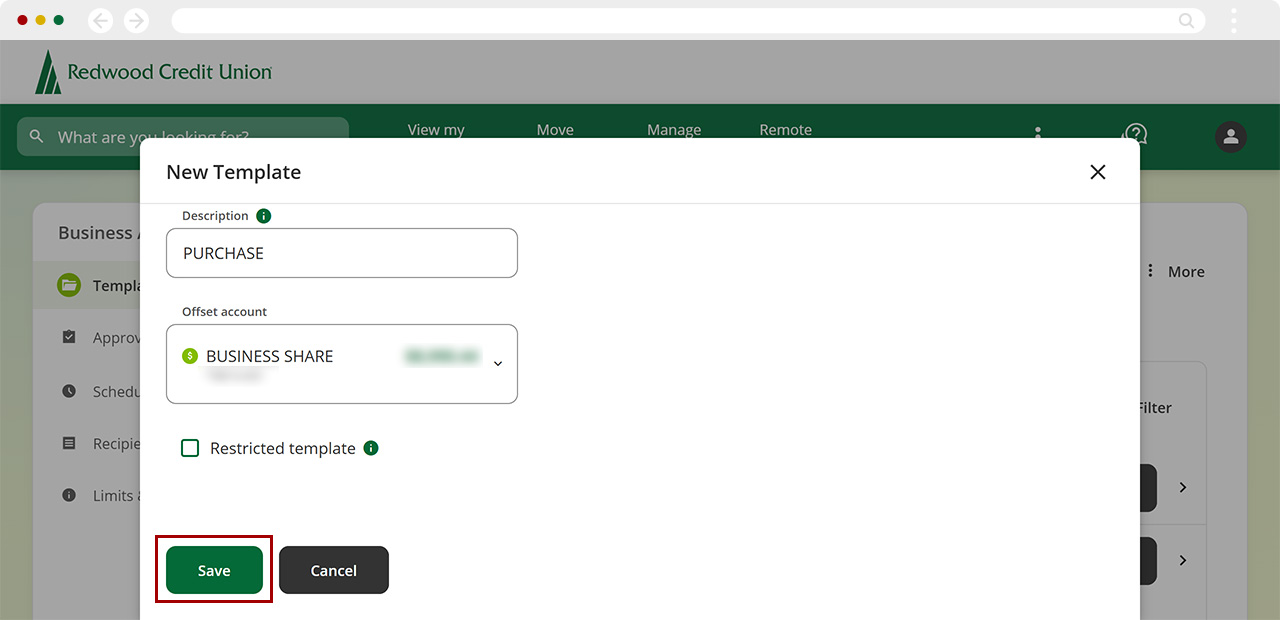
- If you wish to make it a Restricted template, check the box.
Note: Restricted templates can only be seen and used by sub-users with roles allowing access to restricted templates. Example: You might want a holiday bonus template to be restricted.
Once you have completed all the fields, select Save.
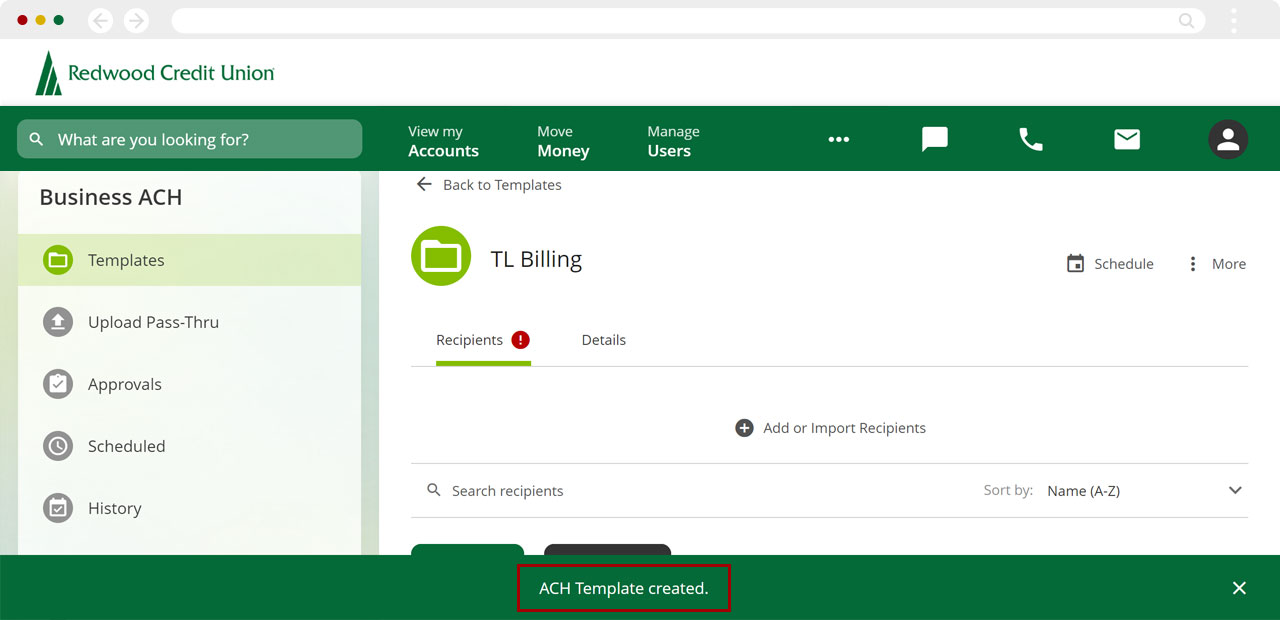
You will see a banner confirming your template was created.
Note: The red exclamation point indicates you need to add a recipient to the template.
Upload a Pass-Thru File
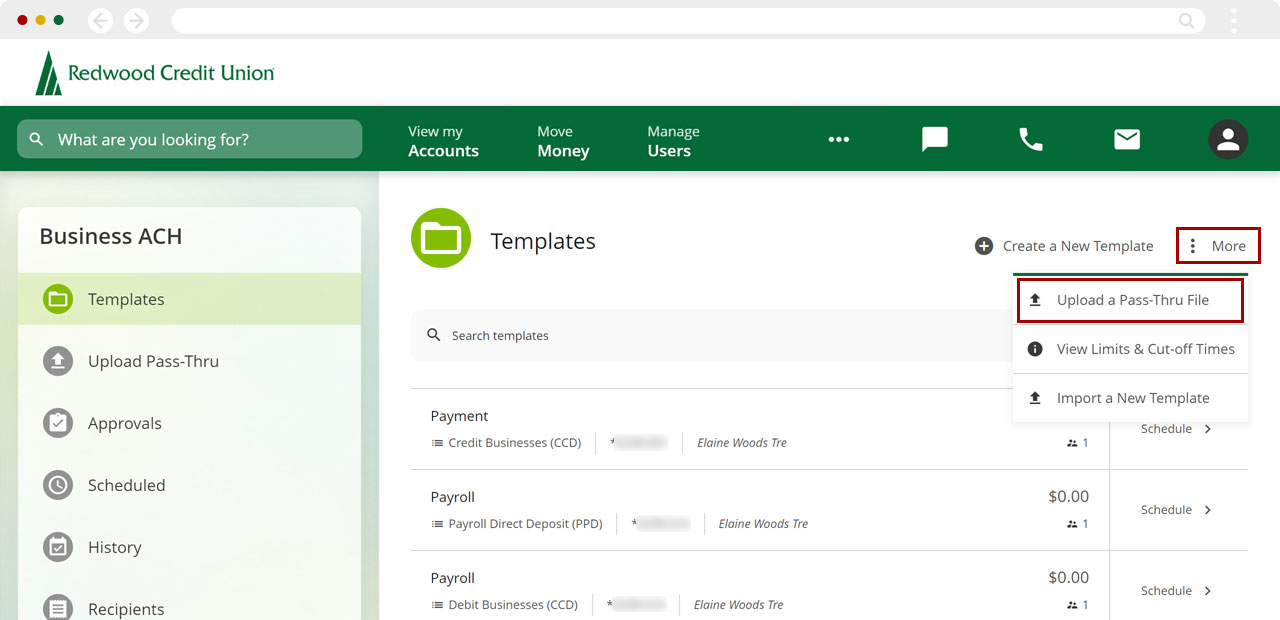
Select More next to Create a New Template, then select Upload a Pass-Thru File.
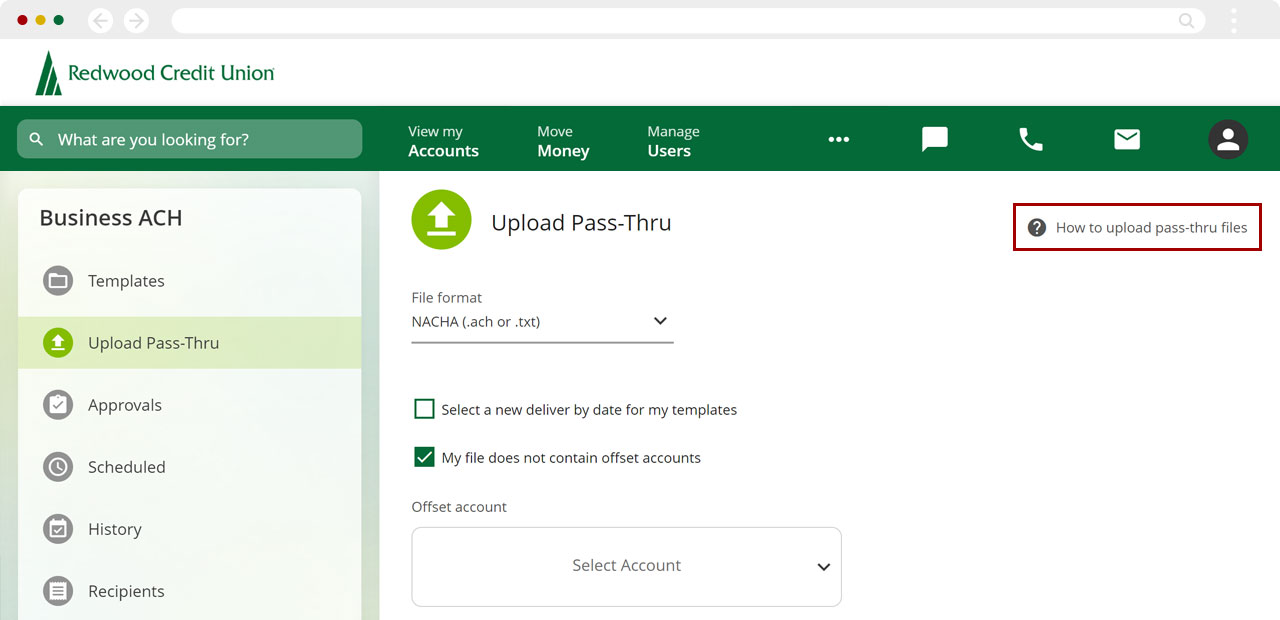
Select the File format, check the box for Select a new deliver by date for my templates (if needed), and check the box for My file does not contain offset accounts (if applicable). Then upload your file and follow the prompts.
For more information, tap How to upload pass-thru files next to the question mark (?) at the top right.
Import a New Template
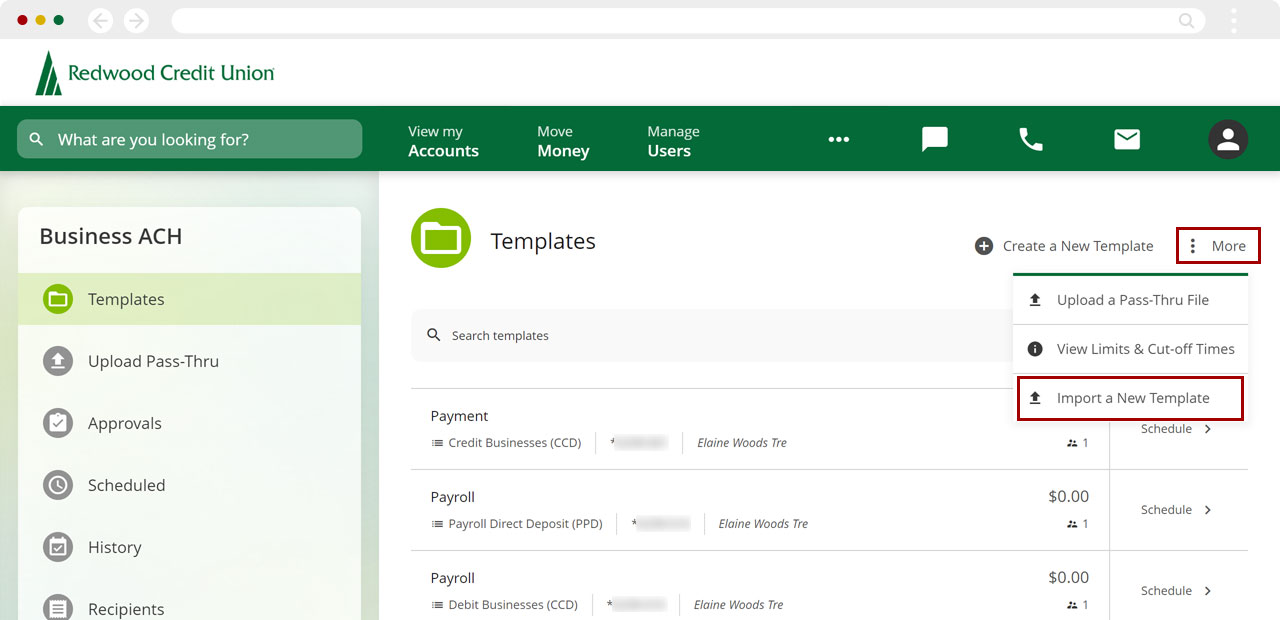
Select More next to Create a New Template, then select Import a New Template.
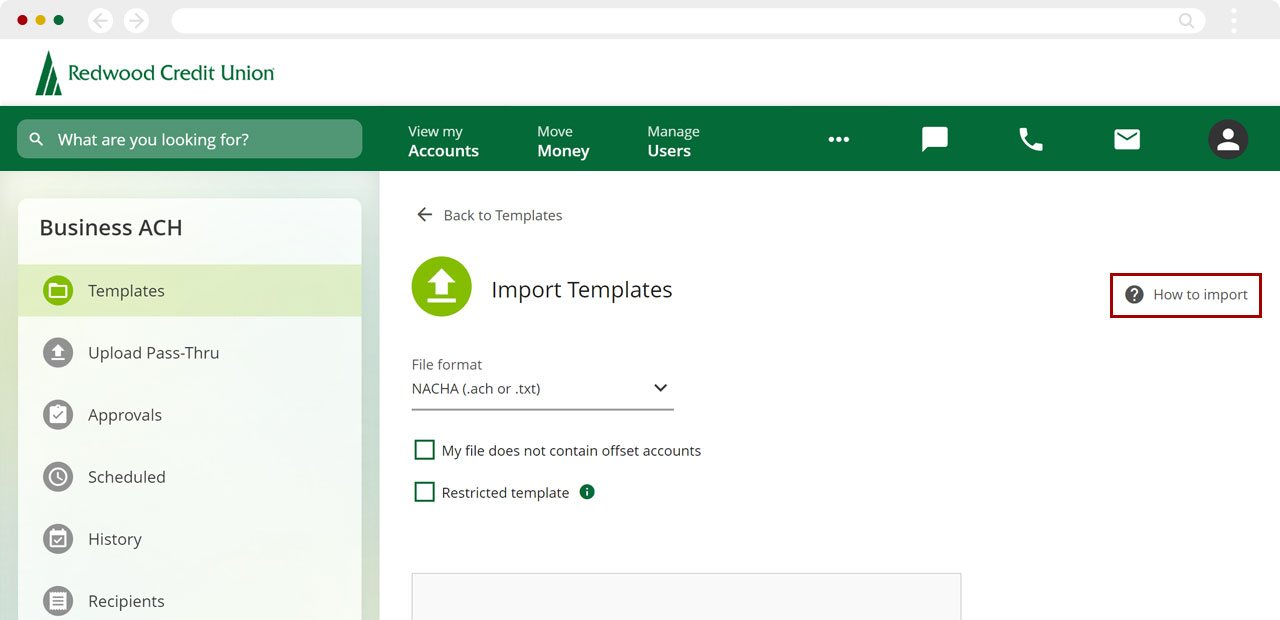
Select the File format, check the box for My file does not contain offset accounts (if applicable), and check the box for Restricted template (if applicable). Then upload the file and follow the prompts.
For more information, tap How to import next to the question mark (?) at the top right.
Edit Templates
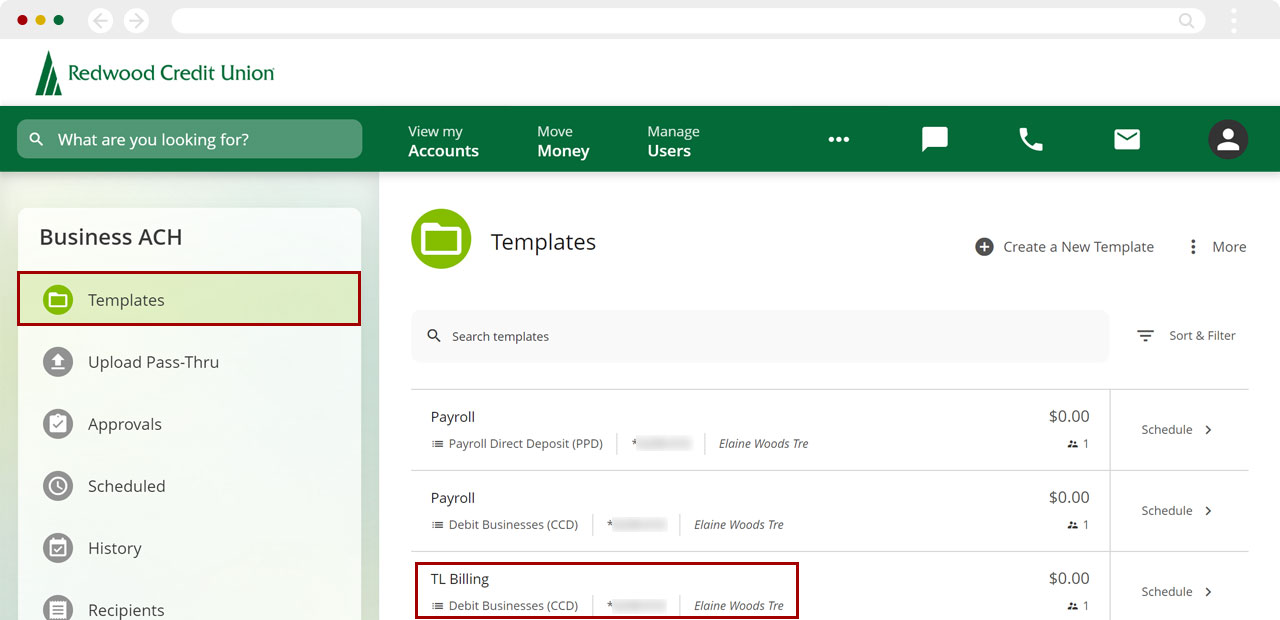
From the Templates screen, select the template you want to edit.
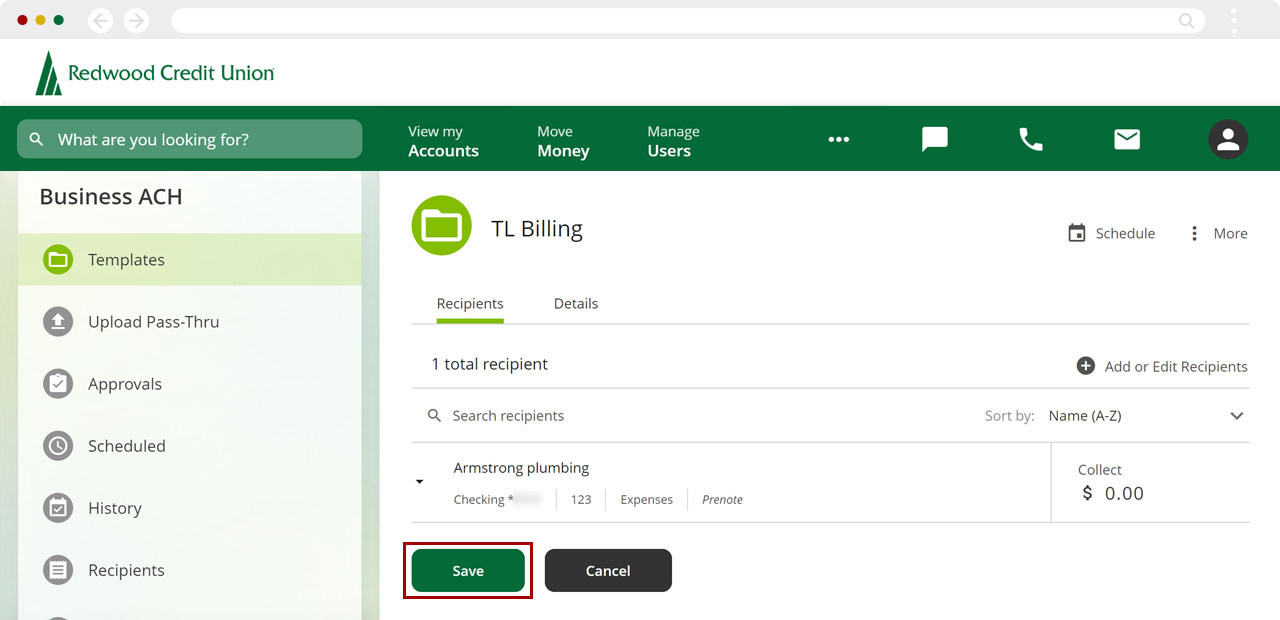
Make changes to the template, then select Save.
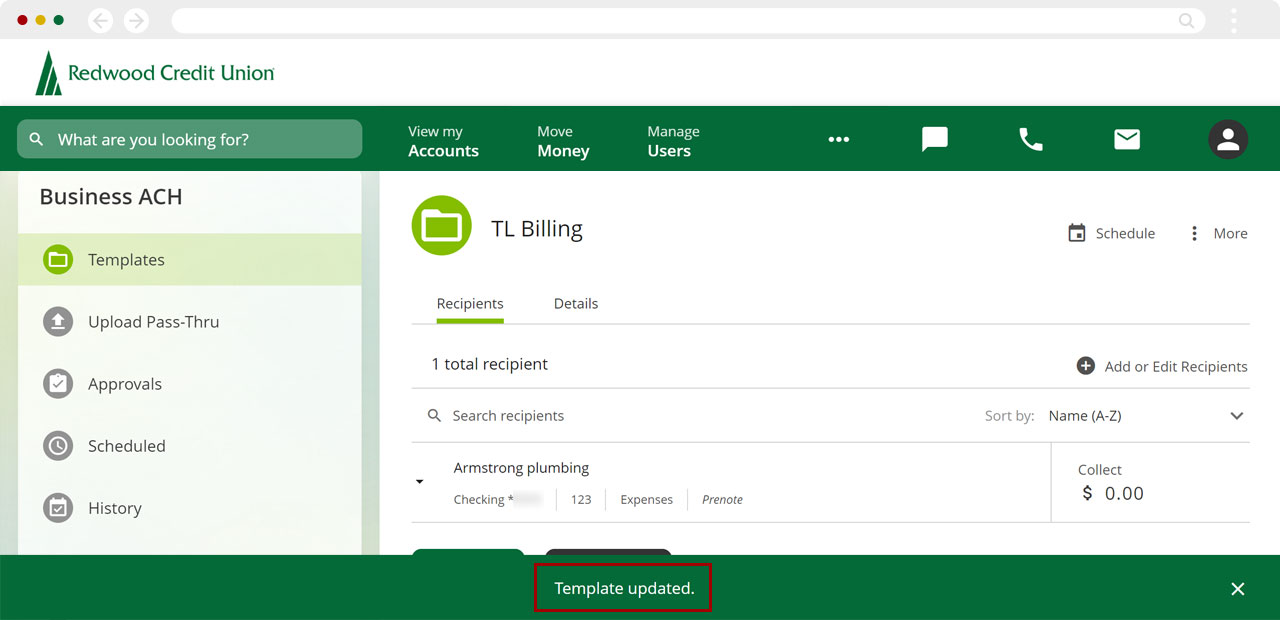
You will see a banner confirming the template was updated.
Delete Templates
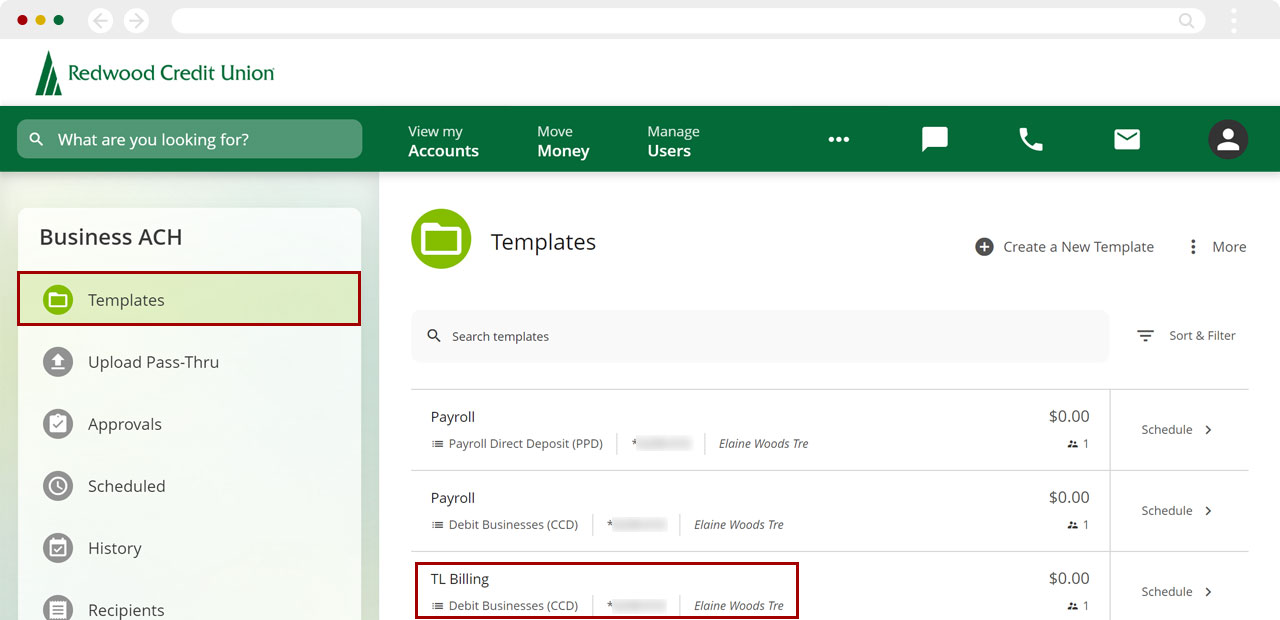
From the Templates screen, select the template you want to delete.
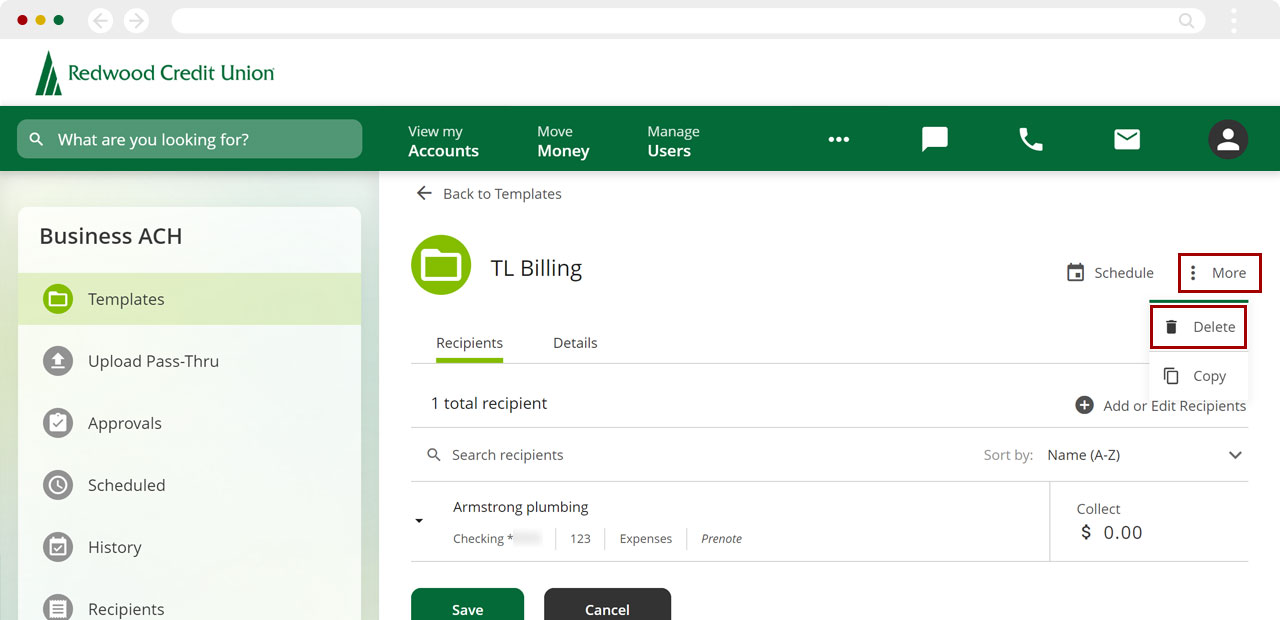
Select More at top right (next to Schedule), then select Delete.
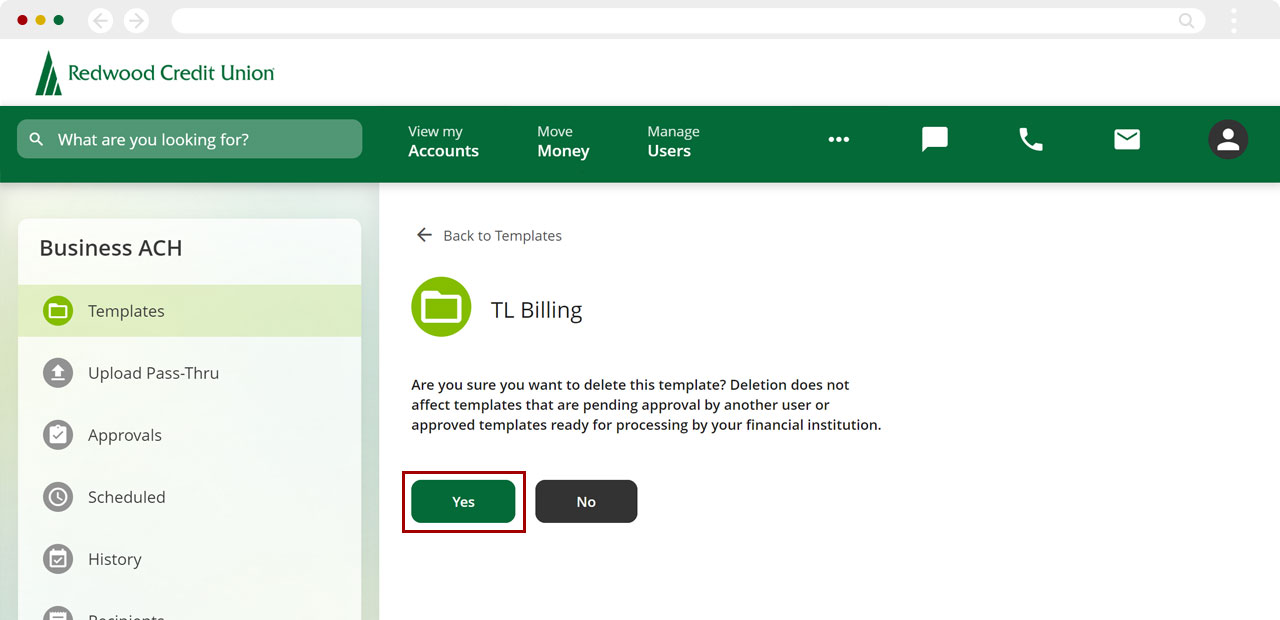
You will see a confirmation screen, select Yes to delete the template.
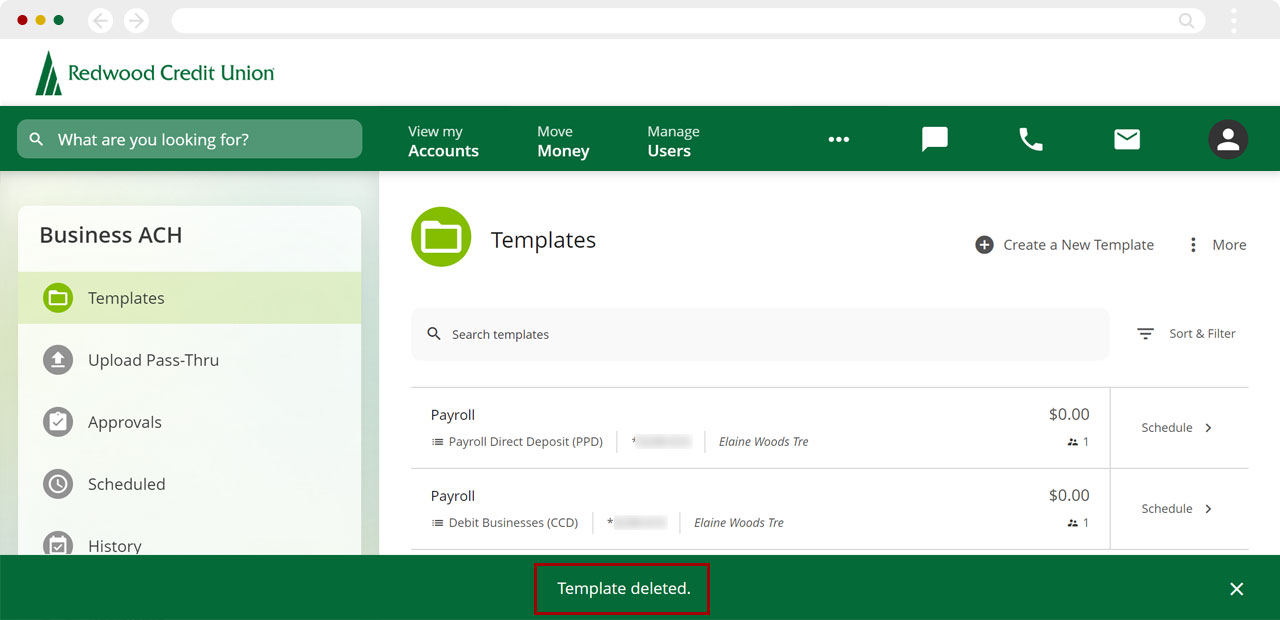
Important: You cannot delete templates that are pending approval by another user or that are approved and ready for processing by your financial institution.
You will see a banner confirming the template was deleted.